

Great Central Road, Loughborough
07526811876
info@exceldrivingschool.co.uk
Mon-Fri - 8:00 to 18:00 Sat 8:00 to 12:30 Sun - Closed

Learner driver checking mirrors and observing a junction during a manual driving lesson in Loughborough

Common Reasons Learners Fail Their Driving Test

Understanding the common reasons learners fail their driving test can help you prepare more effectively and avoid turning small habits into serious mistakes. The practical test is not about driving perfectly; it is about showing that you can drive safely, make sound decisions and remain in control without help.

According to the Driver and Vehicle Standards Agency (DVSA), the most frequent faults involve observation, mirrors, moving off, positioning, signs, road markings, steering and speed. Here are the key areas to work on before taking your driving test in Loughborough.

How Driving Test Faults Are Marked

There are three types of fault: a driving fault, a serious fault and a dangerous fault. You can pass with no more than 15 driving faults, but one serious or dangerous fault will result in a fail. Repeating the same driving fault can also become serious if it shows an unsafe pattern.

You can read the full GOV.UK explanation of driving test faults and results.

1. Not Making Effective Observations at Junctions

Junction observation is consistently one of the most common reasons for failing. Problems include looking too late, emerging without a clear view, approaching too quickly or failing to check properly in both directions.

How to improve: Approach at a speed that gives you time to assess the junction. Use effective observation rather than a quick glance, and do not proceed until you are confident that the gap is safe. If visibility is restricted, move forward gradually while continuing to look.

2. Not Using Mirrors Correctly

Mirror checks need to happen before you change speed or direction. Common mistakes include signalling before checking, moving lanes without checking for nearby traffic, or leaving the mirror check until the manoeuvre has already begun.

How to improve: Build a consistent mirrors-before-action habit. Check the appropriate mirrors before signalling, changing position, changing lanes, slowing down or pulling up. The examiner needs to see that your observation affects the decision you make.

3. Moving Off Unsafely

Learners can lose marks by moving away without an effective blind-spot check, rolling back on a hill, or pulling out when another road user is approaching.

How to improve: Prepare the car first, make all-round observations, check the relevant blind spot and move only when it is safe. Take extra care when moving away from behind a parked vehicle because your view may be restricted.

4. Incorrect Positioning at Junctions and Roundabouts

Choosing the wrong lane, positioning too far left before a right turn or cutting across lanes on a roundabout can confuse or obstruct other road users.

How to improve: Read signs and road markings early. Select the correct lane in good time, keep a stable road position and avoid last-second lane changes. If you take the wrong route safely, continue safely—going the wrong way is not automatically a driving fault.

5. Responding Incorrectly to Traffic Lights, Signs or Road Markings

Examples include reacting late to a speed-limit change, stopping beyond the correct line, entering a blocked box junction, ignoring lane arrows or failing to move when a green light shows and the way ahead is clear.

How to improve: Scan further ahead so information does not arrive as a surprise. Identify the sign, marking or light, decide what it requires and respond smoothly. Do not follow another vehicle blindly; confirm that the signal and road ahead allow you to proceed.

6. Poor Steering Control

Steering too early or too late can cause the car to mount the kerb, swing wide or move too close to parked vehicles. Rushed steering can also affect your road position after a turn.

How to improve: Reduce speed before the turn, look where you want the car to go and steer smoothly at the correct time. Practise coordinating speed, clutch control and steering so you are not trying to correct everything at once.

7. Poor Road Position

Driving too close to the kerb, too near the centre line, straddling lanes or staying unnecessarily in the right-hand lane can create risk for other road users.

How to improve: Look well ahead rather than immediately in front of the bonnet. Use road markings and the flow of traffic to maintain a safe, consistent position. Leave suitable clearance when passing parked cars, cyclists and other hazards.

8. Driving at an Unsafe or Inappropriate Speed

Speed faults are not limited to exceeding the speed limit. Driving too fast for bends, weather, visibility or traffic conditions is unsafe, while driving much too slowly without reason can hold up other road users and show poor judgement.

How to improve: Treat the speed limit as a maximum, not a target. Choose a speed that allows you to stop safely within the distance you can see to be clear, then make sensible progress when conditions allow.

9. Losing Control During a Reversing Exercise

During parking or reversing, learners may focus so heavily on accuracy that they forget all-round observation. Other common problems include rushing, touching the kerb or continuing when another road user approaches.

How to improve: Keep the car slow and controllable, observe all around throughout the manoeuvre and pause if the situation changes. A safe correction is better than continuing with a poor position.

10. Letting Nerves Change Your Normal Driving

Nerves do not cause a fail by themselves, but they can lead to rushed decisions, missed observations or overthinking a small mistake. One minor error does not necessarily mean the test is lost.

How to improve: Use mock tests to practise driving independently and following directions under realistic pressure. If you make a mistake, stay calm, return your attention to the road and continue safely.

How to Know When You Are Test-Ready

You are more likely to be ready when you can drive safely and independently across different roads and traffic conditions, not only on familiar routes. You should be able to:

  • make observations without repeated prompts
  • choose safe gaps and make steady progress
  • respond correctly to signs, signals and road markings
  • control the car during normal driving and manoeuvres
  • deal calmly with unfamiliar situations
  • recognise and correct small mistakes safely

Regular manual driving lessons in Loughborough can help turn these skills into consistent habits. If you need concentrated preparation and the format suits your experience, an intensive driving course may also help you build momentum.

Frequently Asked Questions

How many driving faults can I make and still pass?

You can pass with no more than 15 driving faults, provided you make no serious or dangerous faults. However, repeating the same driving fault can show a pattern and may be marked as serious.

Will I fail for taking a wrong turn?

No. The DVSA states that taking a wrong turn is not itself a fault. What matters is that you continue safely and follow the examiner’s directions to return to the route.

Should I book a test before I am fully ready?

A test date should not replace proper preparation. Aim to drive consistently without prompts during lessons and mock tests before taking the practical test.

What should I do after an unsuccessful test?

Use the examiner’s feedback to identify the exact skills that need work. Focus your next lessons on the underlying habit rather than only rehearsing a particular test route.

For more help choosing the right learning schedule, read our guide to manual driving lessons versus intensive courses. You can also review the DVSA’s official top reasons for failing the driving test.

Ready to Improve Your Driving?

Call or message to check availability.

Contact Excel Driving School

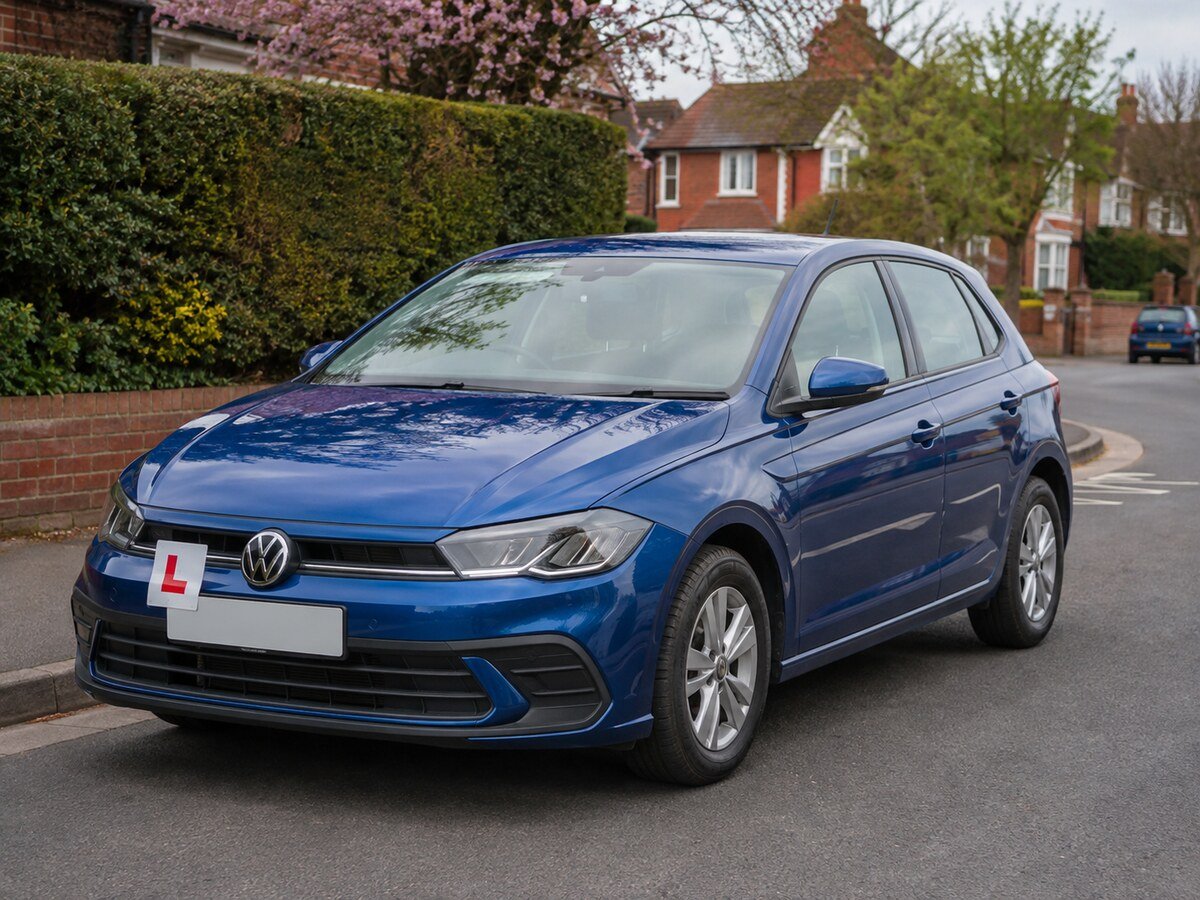
Blue 2024 Volkswagen Polo Life learner car with an L plate in Loughborough

Manual Driving Lessons or an Intensive Course: Which Is Right for You?

Choosing how to learn to drive is an important decision. Some learners prefer regular weekly lessons that allow skills to develop steadily, while others want to make faster progress through an intensive course.

Excel Driving School provides professional tuition in Loughborough, helping learners compare manual driving lessons vs intensive course options. The best choice depends on your experience, confidence, availability and learning style.

What Are Weekly Manual Driving Lessons?

Weekly lessons usually take place once or twice a week and allow you to build your ability over time. Each lesson develops the skills covered previously, while giving you time to reflect and practise between sessions.

This format is often suitable for complete beginners, nervous learners and people balancing lessons with work, college or family commitments.

What Is an Intensive Driving Course?

An intensive course concentrates a larger number of lessons into a shorter period. Lessons may take place on several days each week, depending on your availability and current ability.

The purpose is not to skip essential learning. It is to reduce long gaps between lessons so that skills remain fresh and progress can be more continuous.

Benefits of Weekly Lessons

  • More time to absorb feedback between sessions
  • Easier to fit around work, education or family life
  • Lower short-term financial commitment
  • Suitable for learners who tire easily during longer sessions
  • Allows confidence to grow at a measured pace

Weekly lessons can be especially useful when a learner needs time to become comfortable with vehicle control, traffic and independent decision-making.

Benefits of an Intensive Course

  • Frequent practice can reduce the need to recap previous topics
  • Progress can feel more focused and structured
  • Useful for learners with a suitable block of free time
  • Can support experienced learners who need concentrated preparation
  • May help maintain momentum when a test date is approaching

An intensive course works best when the course length matches your actual ability. A complete beginner generally needs more time than someone returning to driving after previous lessons.

Which Option Costs Less?

The cheapest option is the one that helps you reach a safe, independent standard efficiently. A short course that is unrealistic for your level may lead to extra lessons later. Equally, long gaps between weekly lessons may slow progress.

Excel Driving School offers competitive lesson options and will recommend a realistic route rather than promising an unsuitable number of hours.

How Your Learning Style Affects the Choice

Some learners enjoy frequent practice and retain information well from one day to the next. Others need recovery time, private practice and space to process feedback.

Consider how well you concentrate during longer sessions. If your attention drops significantly after an hour, a highly compressed schedule may not give the best results.

Can Nervous Learners Take an Intensive Course?

Yes, but the schedule must be appropriate. A supportive instructor can introduce new situations gradually, even within an intensive format. However, learners with significant anxiety may benefit from starting with regular lessons before increasing frequency.

Should You Book a Test Before Choosing?

A test date should not determine an unrealistic course length. It is better to assess your current standard first, then choose a schedule that gives enough time to become consistently safe and independent.

Questions to Ask Yourself

  • How much previous driving experience do I have?
  • Can I commit to frequent lessons without cancellations?
  • Do I learn better through repetition or reflection?
  • Can I maintain concentration during longer sessions?
  • Do I have access to suitable private practice?
  • Am I working towards a realistic test date?

Frequently Asked Questions

Are intensive courses only for experienced learners?

No. Complete beginners can take intensive courses, but they need a realistic number of hours and enough time to absorb each stage of learning.

Will an intensive course guarantee a pass?

No driving course can guarantee a pass. Success depends on reaching the required standard and demonstrating safe, independent driving on the day.

Can I switch from weekly lessons to an intensive course?

Yes. Many learners begin with weekly tuition and increase lesson frequency later when they have more availability or are closer to test standard.

Learn more about our manual driving lessons in Loughborough and intensive driving courses.

Ready to Start Learning?

Call or message to check availability.

Contact Excel Driving School

How Many Driving Lessons Do You Need to Pass Your Test?

One of the first questions most learner drivers ask is, “How many driving lessons will I need before I am ready to pass my test?”

The honest answer is that there is no fixed number. Every learner develops at a different pace depending on confidence, previous experience, lesson frequency and how much useful practice they receive between lessons.

At Excel Driving School, the focus is on helping learners become safe, confident manual drivers—not simply reaching an arbitrary number of lessons.

What Does the DVSA Say?

National guidance commonly suggests that many learners require around 45 hours of professional tuition together with additional private practice before reaching test standard. This is an average rather than a target or guarantee.

Some learners become test-ready sooner, while others benefit from additional tuition to develop stronger judgement, control and consistency. The right time to take your test is when you can drive safely and independently across a wide range of road and traffic conditions.

What Affects How Quickly You Learn?

Previous driving experience

If you have already practised basic vehicle control with a suitable supervising driver, you may feel more comfortable during your early lessons. Complete beginners should not worry, however; starting without experience allows good habits to be developed correctly from the beginning.

How often you take lessons

Regular lessons usually support steadier progress because the skills from one session remain fresh for the next. Long gaps may mean spending part of each lesson rebuilding confidence or revisiting previous topics.

Private practice

Suitable private practice can reinforce skills introduced during professional lessons. It should complement structured tuition rather than replace it, and the supervising driver and vehicle must meet all legal requirements.

Confidence and anxiety

Some learners feel relaxed behind the wheel immediately, while others need more time to become comfortable in traffic. A calm, patient approach allows confidence to grow without rushing important skills.

Your learning style

Learners respond differently to demonstrations, verbal explanations, diagrams and repeated practice. Lessons tailored to the individual can make new skills easier to understand and retain.

The variety of roads you experience

Being comfortable on one familiar route is not enough. Test-ready learners should be able to manage residential roads, busy junctions, roundabouts, higher-speed roads, changing speed limits and unfamiliar directions safely.

Weekly Lessons or an Intensive Driving Course?

Excel Driving School offers both regular manual driving lessons in Loughborough and intensive driving courses.

Weekly lessons suit learners who prefer to build experience steadily while fitting tuition around work, college or family commitments. An intensive course may suit someone who has suitable availability, learns well with frequent practice and wants to progress over a shorter period.

An intensive course does not remove the need to master every required skill. It concentrates the learning schedule, so the appropriate course length should be based on your current ability rather than how quickly you hope to book a test.

Learning to Drive in Loughborough

Loughborough gives learners experience across a useful mixture of environments, including residential roads, town-centre traffic, roundabouts, dual carriageways and nearby rural routes.

Learners may also encounter buses, cyclists, pedestrians, university-related traffic and roads with changing speed limits. Structured local tuition helps you develop observation, planning and lane discipline while gradually introducing more demanding situations.

How Do You Know When You Are Test-Ready?

You are approaching test standard when you can complete ordinary drives safely with minimal prompting from your instructor. This includes planning ahead, selecting safe gaps, controlling the car smoothly and responding appropriately when situations change.

A useful test-readiness assessment may include:

  • Driving independently using road signs or a sat-nav
  • Managing junctions and roundabouts without repeated assistance
  • Maintaining suitable speed and following distance
  • Completing the required manoeuvres safely
  • Reacting calmly to mistakes and unexpected situations
  • Demonstrating consistent observations throughout the drive

One successful lesson is encouraging, but consistency across several lessons and different routes is more important.

Do Not Focus Only on Passing Quickly

It is understandable to want to pass as soon as possible, especially when lessons require both time and money. However, booking a test before you are ready can increase pressure and may lead to additional costs if further tests and lessons are required.

The skills developed during driving lessons will be used long after the practical test. Good tuition should prepare you for independent driving, not only the test route.

Why Choose Excel Driving School?

Excel Driving School provides professional manual tuition in Loughborough with lessons adapted to the learner’s needs and progress.

Learners benefit from:

  • Professional manual driving lessons
  • Competitive lesson packages without compromising tuition quality
  • Intensive driving courses where appropriate
  • Calm, patient and supportive instruction
  • Structured lessons focused on measurable progress
  • Preparation for safe independent driving as well as the practical test

Frequently Asked Questions

Can I pass with fewer than 45 hours of lessons?

Yes. Some learners need fewer hours and others need more. The number depends on your ability, consistency, confidence and practice rather than a fixed national requirement.

Will two-hour lessons help me learn faster?

Longer lessons can provide more time to travel to varied roads and practise a topic in depth. Whether they suit you depends on your concentration, availability and stage of learning.

Should I book my test before starting lessons?

It is usually better to discuss your current ability and likely preparation time with your instructor. A test date should provide enough time to become consistently safe and independent.

Are intensive courses suitable for complete beginners?

They can be, provided the course length is realistic and the learner can manage frequent lessons. An assessment helps identify the most suitable option.

How can I reduce the number of lessons I need?

Take lessons consistently, arrive rested and prepared, reflect on instructor feedback and use suitable private practice to reinforce what you have learned.

For more practical guidance, read our article on 10 essential driving tips for new learners in Loughborough.

Ready to Start Learning?

Contact Excel Driving School today for professional manual driving lessons or an intensive driving course in Loughborough.

Contact Excel Driving School

Archive

August 2026
M T W T F S S
 12
3456789
10111213141516
17181920212223
24252627282930
31  

Post Categories